
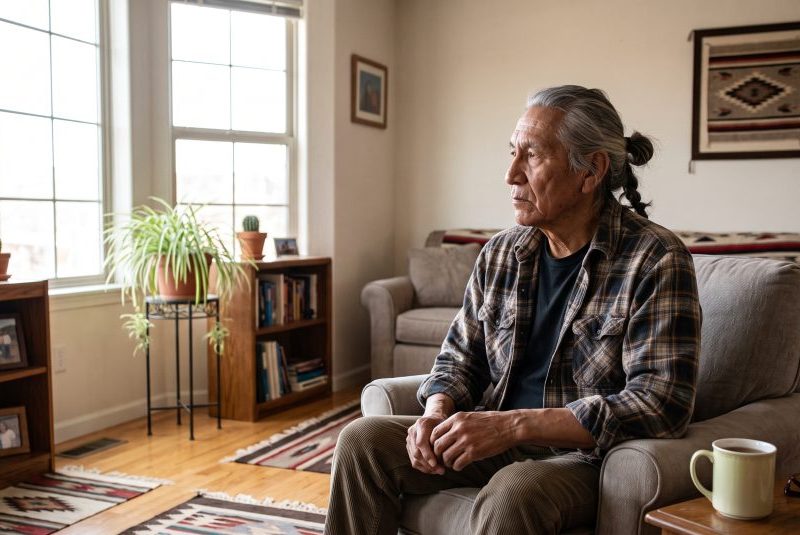
Social isolation is one of the biggest risks of aging in place, and it is easy to miss. It rarely arrives all at once. It builds slowly, 1 small loss at a time, until a home that once sat in the middle of a busy life sits alone in it. The good news is that social isolation is not a fixed part of aging. Once you can name what is driving it, most of it can be turned around.
What social isolation really is
Researchers separate 2 things that often get grouped together.
- Social isolation is objective. It is how much contact a person actually has: how many people they see, how often, and how many groups or roles they are part of.
- Loneliness is how a person feels about that contact. It is the distress of feeling disconnected, even when other people are around.
The 2 do not always match. A person can have plenty of visitors and still feel lonely. A person who lives alone can feel deeply connected. Both matter, and they call for different responses. It helps to know which one you are looking at before you try to fix it.
Warning signs of isolation in older adults
Social isolation is often the result of several changes that each seem small on their own. Together, they add up.
- Driving stops or gets limited. When a person can no longer drive, or drives less, access to friends, activities, and errands shrinks fast.
- The social circle thins out. Friends move away, become home-bound, or die. Over time, the people who used to call or visit are not there anymore.
- Hearing loss makes conversation hard. Group settings get exhausting when a person cannot follow the talk. Many people respond by pulling back from the very gatherings that keep them connected.
- Mobility problems raise the cost of contact. When a short walk to a neighbor’s door becomes a project, casual visits stop happening.
- Care partners lose their own contacts. A spouse or adult child who takes on caregiving often gives up outings, groups, and friendships to keep up. Isolation can affect the care partner as much as the older adult.
Because each change feels minor, families often do not notice the pattern until it is well set. That is why it helps to watch for the trend, not just 1 event.
Health risks of social isolation in seniors
Social isolation is not only a matter of comfort or mood. It is linked to serious physical and mental health risks.
Social isolation is associated with about a 50% higher risk of dementia. Poor social connection is tied to a 29% higher risk of heart disease and a 32% higher risk of stroke. Isolation and loneliness are also linked to higher rates of depression and anxiety, and to earlier death. The U.S. Surgeon General has called loneliness and social isolation major public health problems.
These numbers are not meant to alarm. They are meant to show that staying connected is a health priority, on the same level as diet, movement, and safe footing at home.
How to help an isolated older adult
The drivers of social isolation each have a response. Here are the ones that tend to make the biggest difference.
- Start with transportation. For many older adults, a ride is the first real fix, because it restores access to everything else. The local Area Agency on Aging can point to rides, senior center programs, and volunteer visitor services. The Eldercare Locator (eldercare.acl.gov) can help find the right agency.
- Push for a hearing evaluation. Untreated hearing loss is a quiet, correctable driver of withdrawal. Treating it can bring a person back into conversations they had started to avoid.
- Lean on local community support. Senior centers, faith communities, libraries, and adult day programs offer contact that repeats on its own, so no one has to arrange it fresh each time. Where it exists, the Village to Village Network organizes neighbors to help neighbors stay in their homes, with rides, visits, and help around the house. Not every area has one, so start with what is close by.
- Use video calls as a supplement. A video call helps a person stay in touch with family far away. It is a real support, but it works best alongside in-person contact, not in place of it.
- Care partners need their own circle. If you are caring for someone, protect a few of your own connections. Respite programs and support groups exist so care partners do not disappear into the role.
The bottom line
Social isolation is one of the main risks of aging in place, but it is also one of the most fixable. It builds slowly, so the first step is noticing it. Look for the pattern: less driving, a thinner social circle, skipped gatherings, a care partner who never gets out. Then match the response to the cause. Transportation, hearing care, and recurring community all restore contact in different ways. Aging in place can stay what it should be: connected, not cut off.
Sources
- Loneliness and Social Isolation Linked to Serious Health Conditions (CDC)
- Social Isolation and Loneliness in Older Adults (National Academies of Sciences, Engineering, and Medicine)
- Our Epidemic of Loneliness and Isolation: The U.S. Surgeon General’s Advisory (HHS)
- Effects of Objective and Perceived Social Isolation on Cardiovascular and Brain Health (American Heart Association)
- Village to Village Network
- Eldercare Locator (Administration for Community Living)