
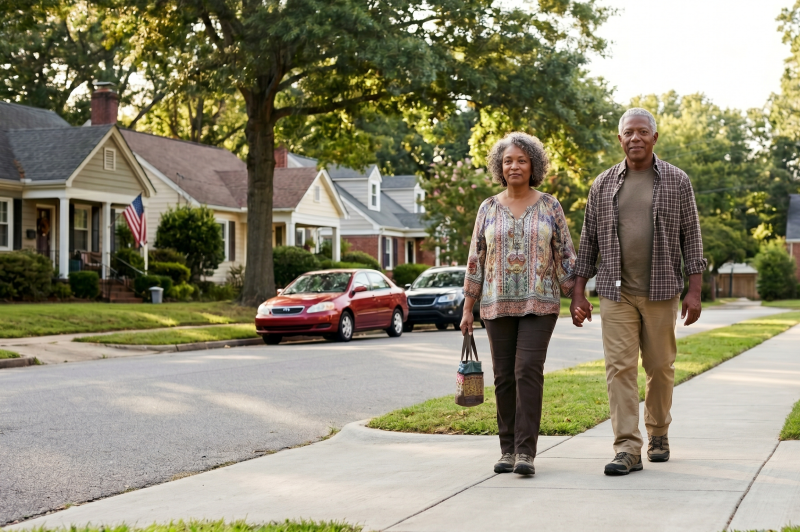
Simple steps to prevent falls, stay active, and live independently — right where you belong.
Aging in place means living in your own home as you get older. Most people want to do exactly that. But staying home safely takes some planning — especially when it comes to walking.
Aging at home statistics
Falls are the number one cause of injury in older adults. With the right habits and a few simple changes, you can keep moving safely for years to come.
- 75% of older adults (50+) want to stay in their own home
- 93% of adults 65+ currently live in their own home or apartment
- 1 in 4 adults 65+ falls each year
- Falls can be substantially reduced through lifestyle adjustments, evidence-based prevention programs, and clinical-community partnerships
Sources: AARP, Pew Research, CDC, and NCOA
Why Walking Is So Important for Seniors
Walking every day is one of the best things you can do for your body and mind. It builds leg strength. It helps your balance. It lifts your mood and keeps your heart healthy.
Aim for 30 minutes of walking a day. You can break it into three 10-minute walks if that is easier. The key is to keep moving — and to do it safely.
Fall Prevention at Home: Make Your Space Safer
Most falls happen at home, not outside. Here are four easy ways to reduce your risk as part of your senior home safety plan.
- Clear the floors – remove rugs, cords, and clutter from walkways. These are the most common tripping hazards at home.
- Add more light – put nightlights in halls, bathrooms, and near stairs. Motion lights are great for nighttime trips.
- Install grab bars – put grab bars in the bathroom and handrails on both sides of every staircase. They make a big difference.
- Non-slip and trip materials – Use non-slip mats in the shower and kitchen. Tape down area rugs or remove them completely.
The bathroom
The bathroom is a room worth paying extra attention to. A few simple additions — like a shower bench, a raised toilet seat, and a handheld showerhead — can make a big difference in how safe and confident you feel every day
Stairs
Always hold the handrail on stairs. Take one step at a time. Make sure the stairway is well-lit before you go up or down. Try to keep the things you use most on one floor so you make fewer trips up and down the stairs. Install a stairlift before using the stairs becomes too difficult.
Walking Safely Outside
Going for a walk outside is great for your health. Follow these simple rules to stay safe every time you head out the door.
- Wear appropriate walking shoes.
- Walk during the day or in well-lit areas at night.
- Stick to flat, familiar paths. Avoid wet sidewalks after rain and snow.
- Use a cane or walking stick if your doctor says you should. It keeps you steady.
- Bring your phone. Tell someone where you are going and when you will be back.
- Drink water before you go. Being thirsty can make you dizzy.
- Watch for curbs, slopes, and driveways where the ground changes height.
- Walk facing traffic if there is no sidewalk.
Heat can make you dizzy and weak — both of which raise your risk of falling. Walk in the early morning or evening when it is cooler. Wear light clothing. Drink water before, during, and after your walk. If you feel lightheaded, stop and rest in the shade right away.
Choosing the Right Shoes
Good shoes are one of the best tools for fall prevention for seniors. The right pair gives you grip, support, and balance with every step indoors and outside.
Good shoe features
- Low, wide heel
- Non-slip rubber bottom
- Laces or velcro that hold tight
- Stiff back to support your heel
- Wide toe area for balance
- Lightweight and easy to put on
Shoes to avoid
- Flip-flops or open-back shoes
- High heels or thick wedges
- Worn-out soles with no grip
- Smooth leather bottoms
- Shoes that are too loose
- Walking on hard floors in socks
Exercises That Help Prevent Falls
Strong legs and good balance are your best defense against falls. You do not need a gym. These simple moves can be done at home. Many senior centers also offer free balance and fitness classes. The socialization can be good for you, too! Ask your doctor or a physical therapist to suggest exercises that are right for you.
Balance moves
- Stand on one foot near a wall
- Walk heel to toe in a straight line
- Stand on a folded towel or pillow
- Try a tai chi class
- Slow sit-to-stand practice
Strength moves
- Sit and stand slowly from a chair
- Rise up on your toes at the counter
- Lift one leg at a time while seated
- Squeeze a resistance band with legs
- Roll your ankles in circles
When to Talk to Your Doctor About Falling
Talk to your doctor if any of these are true for you:
- You have fallen in the past year
- You feel dizzy or unsteady when you walk
- You take medicine that makes you tired or lightheaded
- Your vision has changed recently
- You are afraid of falling
Your doctor can check your medicines, check for side effects, adjust doses, test your balance, and point you to the right help. Bring all your pill bottles to every doctor visit, including over-the-counter medicines and supplements. Asking for support is a smart move.
Aging in place is possible for most older adults
Safe walking is one of the most important parts of making it work. Clear your home of hazards, wear the right shoes, stay active, and ask for help when you need it. Small changes add up to big protection — and a longer, more independent life at home.
Related Articles
Products mentioned in article
We choose products that support safe living at home. Many are items we use ourselves. Consider your needs before purchasing. Links go to Amazon for convenience. We may earn a small commission at no extra cost to you. This supports our free articles, tools, and research.
Find more items on our product pages.

TrailBuddy Trekking Poles

Clip on Flashlights

You must be logged in to post a comment.